.png)
Transport Assistance — getting you there, your way.
Reliable, supported transport to the places that matter — and patient travel-training for participants who want to do more of the journey themselves.
Support that fits the rhythm of your life — not the other way around.
Transport is one of those quiet pieces of the puzzle. When it's working, you barely notice it. When it isn't, the rest of life gets very small very fast — appointments missed, jobs declined, friendships drifting.
Our Transport Assistance helps participants get reliably to the places they need and want to go — medical appointments, work, study, social activities, family visits, supermarket runs. Sometimes we drive. Sometimes we travel together on public transport. Sometimes we sit at the bus stop while a participant practises catching it on their own for the first time.
Behind every trip is a small, deliberate piece of planning: which route, what time of day, what to pack, what to do if something changes. We do that planning with you so trips become predictable — and then, increasingly, automatic.

Communication, your way.
“Travel training isn't glamorous — it's repetition, planning and a worker who knows when to stand back.”
— How we think about Transport Assistance
Practical, person-centred support — mixed to suit you.
Transport support takes several shapes. We adapt to your plan, your goals and the journey at hand.
Public transport with you
Buses, trains, ferries — supported travel that teaches the route, the tap-on, the timetable and what to do if a service is cancelled.
Direct drives
When public transport isn't safe or feasible, your worker drives you in their own vehicle (with appropriate insurance and a clean record).
Travel training
A gradual program — same route, then variations, then new routes — to help you travel independently if that's your goal.
Appointment companion
Door-to-door support to medical, allied health or specialist appointments, including help taking notes or asking questions.
School and work runs
Consistent morning or afternoon transport that fits around study, employment or day-program commitments.
Family-event transport
Getting to weddings, birthdays, funerals or family weekends — sometimes the most important trips of the year.

You're welcome here.
Transport Assistance suits anyone whose disability makes it harder to get around independently — whether that's because of mobility, cognition, anxiety, sensory overload or unfamiliarity with the public transport network.
It also suits participants who can travel independently most of the time but need support for specific, harder journeys — a new specialist on the other side of town, or a late-night event where solo travel doesn't feel safe.
- Participants without a driver's licence
- People building public transport confidence
- Adults attending regular appointments or therapy
- School leavers commuting to TAFE or supported work
- Autistic participants who struggle with travel disruption
- Anyone who's stopped going to things because getting there is too hard
How it fits your NDIS plan.
UCCS is a registered NDIS provider. We support participants however their funding is managed — self-managed, plan-managed or NDIA-managed — and we're happy to walk through what's possible under your plan, without jargon.

Registered with the NDIS Quality and Safeguards Commission, audited against the NDIS Practice Standards and bound by the NDIS Code of Conduct.
NDIS plans handle transport in a few ways. Some plans include a 'Transport' funding line (paid as a fortnightly amount) intended to cover the costs of getting around. Others fund transport through Core Supports when a support worker is travelling with you. Capacity Building can also fund 'travel training' as a goal-led program.
We help you make sense of which budget applies to which trip and we keep things tidy. A typical week might mix a worker-driven appointment (Core hours plus mileage), a public transport training session (Capacity Building) and a self-funded grocery run using your Transport budget.
UCCS is a registered NDIS provider. We work with self-managed, plan-managed and NDIA-managed participants and issue itemised invoices so your plan manager (or you) can allocate costs correctly. We won't charge a trip to the wrong budget to keep things easier on our end.
A clear, unhurried five-step path.
We move at your pace. Every step is consent-led and reviewable — if something isn't working, we change it.
Listen
We start by hearing your story — what's working, what isn't, and what you'd like more of.
Understand
We map needs, goals, preferences, sensory and communication style, and any clinical context.
Plan together
We draft a support plan with you (and family, where you want them involved) — workers, hours, routines.
Deliver
Consistent workers, clear handovers, dignified support. We sweat the small stuff so you don't have to.
Review
Regular check-ins, and an open invitation to change anything. Plans should grow with the person.
Connection, music, belonging.
A glimpse of an everyday shift.
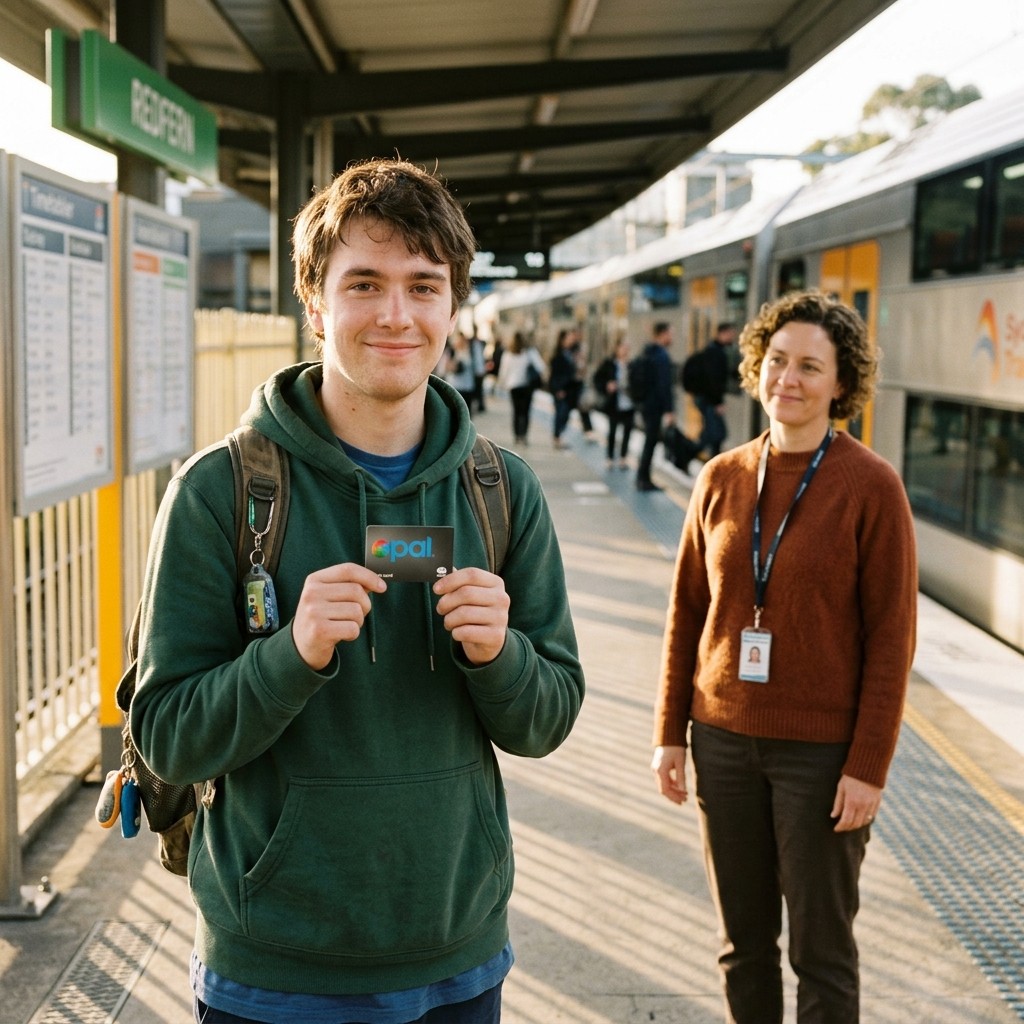
Here's a Wednesday afternoon for a fictional participant we'll call Marcus — a 19-year-old autistic man working toward catching the train to TAFE independently. His worker today is Bea.
Bea meets Marcus at home. They run through the picture timetable they've been using: walk to the station, train at 1:08, change at the interchange, off at TAFE stop, walk to class.
At the platform. Bea steps back; Marcus checks the indicator board himself. Today's a small win — he notices the train is two minutes late before Bea does.
On the train. Marcus prefers the quiet carriage; Bea sits a few seats away. They've agreed she'll only step in if he gives the signal.
Off at TAFE. Marcus walks ahead. Bea follows at a distance, then peels off once Marcus is at the classroom door — he's been clear he doesn't want her walking him in.
Bea is back at the station for the return trip. They debrief on the train: what worked, what was tricky, what to try next week. Next month, the goal is to do the morning trip without Bea on the train at all.
Travel training isn't glamorous. It's repetition, planning and small adjustments — and a worker who knows when to stand back. Six months in, Marcus is doing the full trip on his own three days a week. He picked up a Saturday job at a shop near the station. Independence travels.
Common questions, answered honestly.
Can't see your question? Email us at info@unlimitedcommunitycare.com.au and we'll come back to you.
Related supports that often go hand in hand.
Let's talk about what support could look like for you.
A friendly, no-pressure chat — we'll listen, answer your questions, and only suggest support that genuinely fits.