.png)
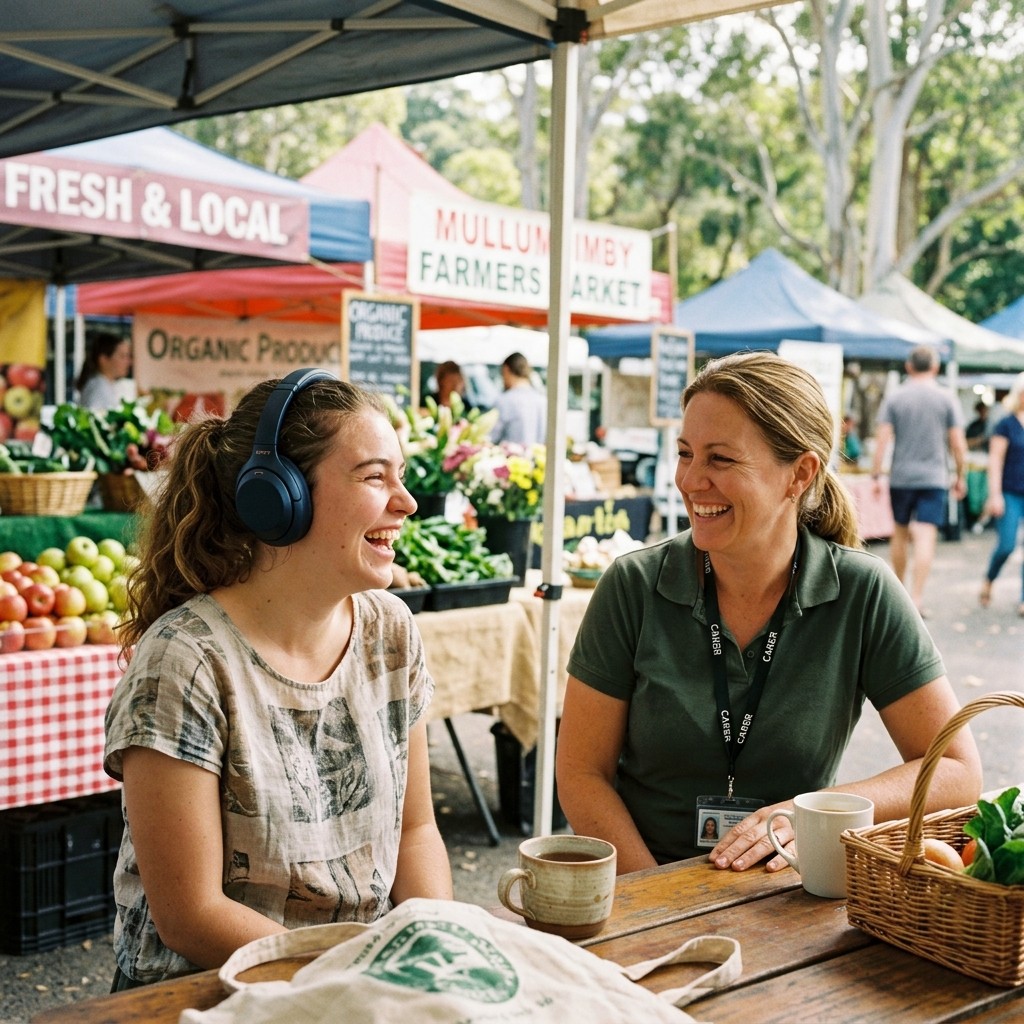
Community Participation — out in the world, on your terms.
Support to take part in the activities, groups and everyday places that make life feel rich and connected — with someone in your corner the whole way.
Support that fits the rhythm of your life — not the other way around.
Belonging is a basic human need. For people living with intellectual disability or autism, it isn't always easy to walk into a new place and feel welcome. Community Participation is the support that bridges that gap — gently, patiently, on your timeline.
We work with you to figure out what 'community' actually means in your life. For one person it's a weekly art group and a quiet visit to the library. For another it's footy training, volunteering at the local op shop and a regular catch-up with cousins. There's no template — your interests lead.
Our role is to make the practical bits easier so you can focus on the experience. We help with planning, transport, communication, sensory preparation and the social side of joining in. Over time, you build connections, routines and a wider sense of what you can do.
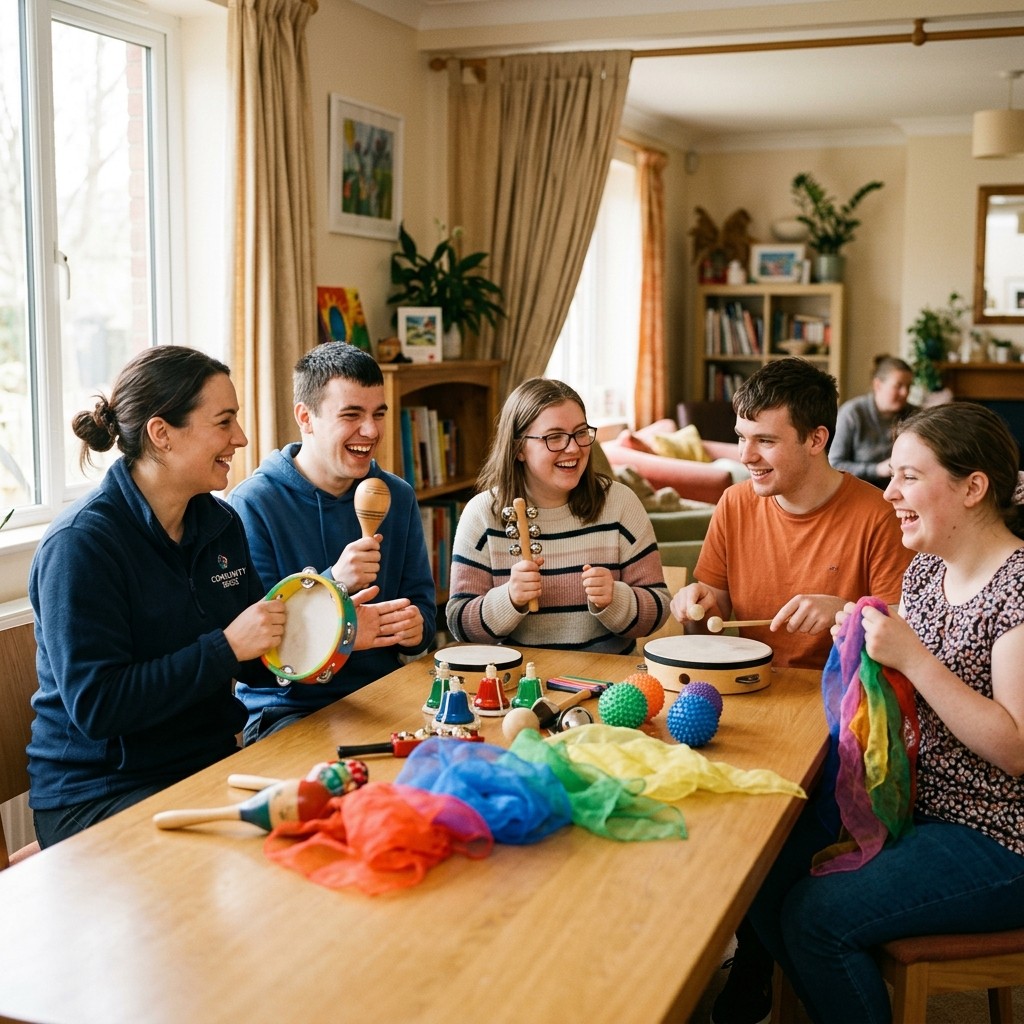
Connection, music, belonging.
“Our job is to make the practical bits easier so you can focus on the experience.”
— How we think about Community Participation
Practical, person-centred support — mixed to suit you.
Community Participation can cover almost any safe, meaningful activity that helps you connect and grow. Here's the shape it often takes with our participants.
Joining groups and classes
Art, music, cooking, sport, faith communities, special interest groups — we help you find them, get there and feel at home.
Events and outings
Markets, concerts, footy games, festivals or just a coffee at your favourite cafe — we plan, prepare and support on the day.
Trying something new
Curious about lawn bowls, drama class or a community garden? We come along while you give it a go — no pressure to stick with it.
Volunteering and giving back
If contributing is important to you, we'll help you find a volunteer role that suits your skills and supports the community you care about.
Building social confidence
Practising introductions, ordering at the counter, asking for help — small skills that make every outing feel a little easier.
Knowing your local area
Learning the bus route, the safe pedestrian crossings, the quiet shops and the staff who already know you. Familiarity is freedom.
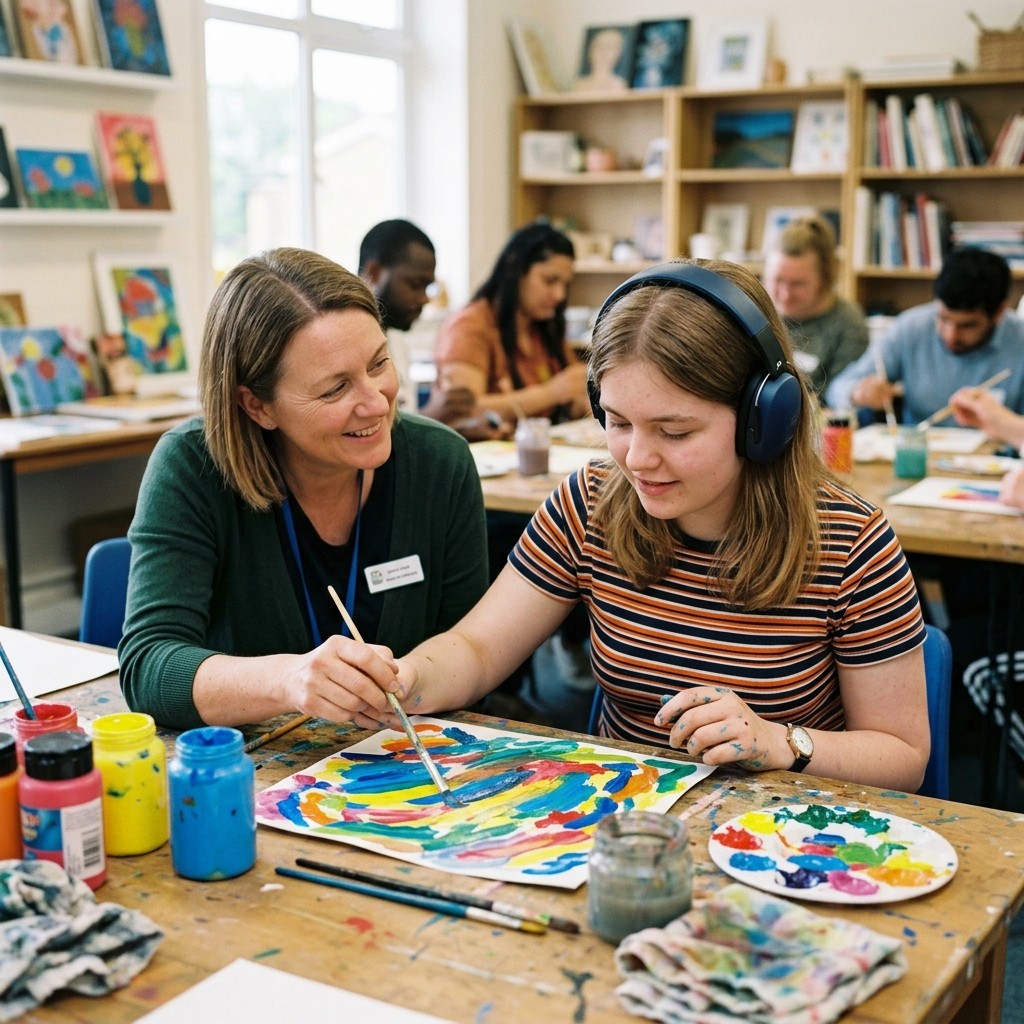
You're welcome here.
Community Participation suits anyone who wants more in their week than appointments and errands. It's especially valuable for school leavers exploring adult life, for people who've felt isolated since the pandemic, and for participants whose families want them to build relationships beyond home.
We adapt to sensory needs — quieter venues, off-peak times, headphones, social stories before new outings — and we always plan around what makes you comfortable. If you've had bad experiences in 'group programs' before, you don't have to repeat them with us; one-to-one support and tiny groups are absolutely fine.
- School leavers and SLES participants
- Adults who want a fuller social week
- People wanting to try inclusive sport or arts
- Autistic participants who prefer 1:1 or small-group outings
- Anyone rebuilding confidence after isolation
- People interested in volunteering or local clubs
How it fits your NDIS plan.
UCCS is a registered NDIS provider. We support participants however their funding is managed — self-managed, plan-managed or NDIA-managed — and we're happy to walk through what's possible under your plan, without jargon.
Registered with the NDIS Quality and Safeguards Commission, audited against the NDIS Practice Standards and bound by the NDIS Code of Conduct.
Community Participation is usually funded under Core Supports — 'Assistance with Social, Economic and Community Participation' (line items in the 04 group). Some participants also have Capacity Building funding for 'Increased Social and Community Participation' that pays for skill development.
We can use both flexibly: a regular Core-funded outing each week, plus a Capacity Building program working toward a goal like 'order independently at a cafe by December'. We keep notes so progress is visible at your next plan review.
If your plan also funds Transport, we'll factor that in so you're not paying twice. As a registered NDIS provider, UCCS can support self-managed, plan-managed and NDIA-managed participants, and we provide clear invoicing your plan manager can process easily.
A clear, unhurried five-step path.
We move at your pace. Every step is consent-led and reviewable — if something isn't working, we change it.
Listen
We start by hearing your story — what's working, what isn't, and what you'd like more of.
Understand
We map needs, goals, preferences, sensory and communication style, and any clinical context.
Plan together
We draft a support plan with you (and family, where you want them involved) — workers, hours, routines.
Deliver
Consistent workers, clear handovers, dignified support. We sweat the small stuff so you don't have to.
Review
Regular check-ins, and an open invitation to change anything. Plans should grow with the person.
Sensory-friendly spaces to create.
A glimpse of an everyday shift.
Here's how a typical Saturday morning might unfold for a fictional participant we'll call Daniel — a 22-year-old with intellectual disability who's been working toward joining a weekly drumming group. His worker today is Ade.
Ade arrives. They run through the social story they prepared last week: where the venue is, who'll be there, where the bathrooms are, and what Daniel can say if it feels like too much.
They take the bus together. Daniel taps on with his own card. Ade chats lightly about the week — keeping things relaxed without making it a 'session'.
At the community centre, Daniel says hello to the group leader. The first ten minutes are loud. Daniel uses his headphones for a bit, then takes them off when his hands are busy on the drum.
Coffee after with two people from the group. Daniel orders his own flat white. Ade sits at the next table — close enough to help, far enough to give space.
Bus home. On the way, they note what worked (the headphones, arriving five minutes early) for next week's plan.
Three months in, Daniel doesn't need the social story anymore. He's swapped numbers with someone from the group and is talking about a beginners' performance night. The support didn't change who he is — it just removed the friction that was keeping him at home.
Common questions, answered honestly.
Can't see your question? Email us at info@unlimitedcommunitycare.com.au and we'll come back to you.
Related supports that often go hand in hand.
Let's talk about what support could look like for you.
A friendly, no-pressure chat — we'll listen, answer your questions, and only suggest support that genuinely fits.