.png)
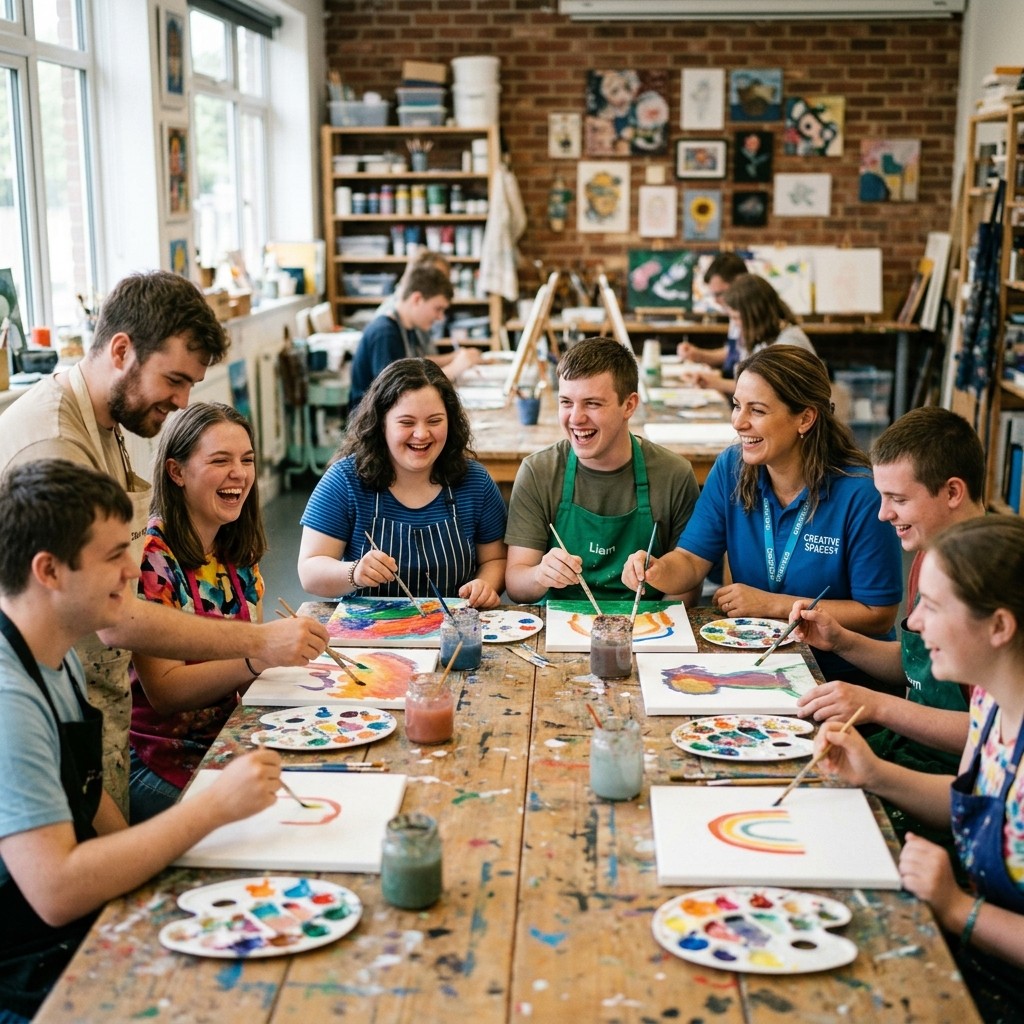
Social & Recreation — the support that makes life feel rich.
Doing what you love, trying what's new, and meeting people along the way — supported in a way that lets you simply enjoy yourself.
Support that fits the rhythm of your life — not the other way around.
If Community Participation is about being part of your community, Social & Recreation is the joyful cousin — the support that exists specifically so you can enjoy your life. Hobbies, friendship, fitness, fandoms, faith communities, beach days, gaming nights, gardening. The good stuff.
We've watched too many people with disability live narrow lives because the practical bits — getting there, knowing what to expect, having someone alongside — were missing. We're here to take those barriers down so you can stop watching from the sidelines.
Importantly, this is your free time. Our job isn't to turn fun into therapy. It's to be present, friendly and useful — and to step back the second we're not needed.
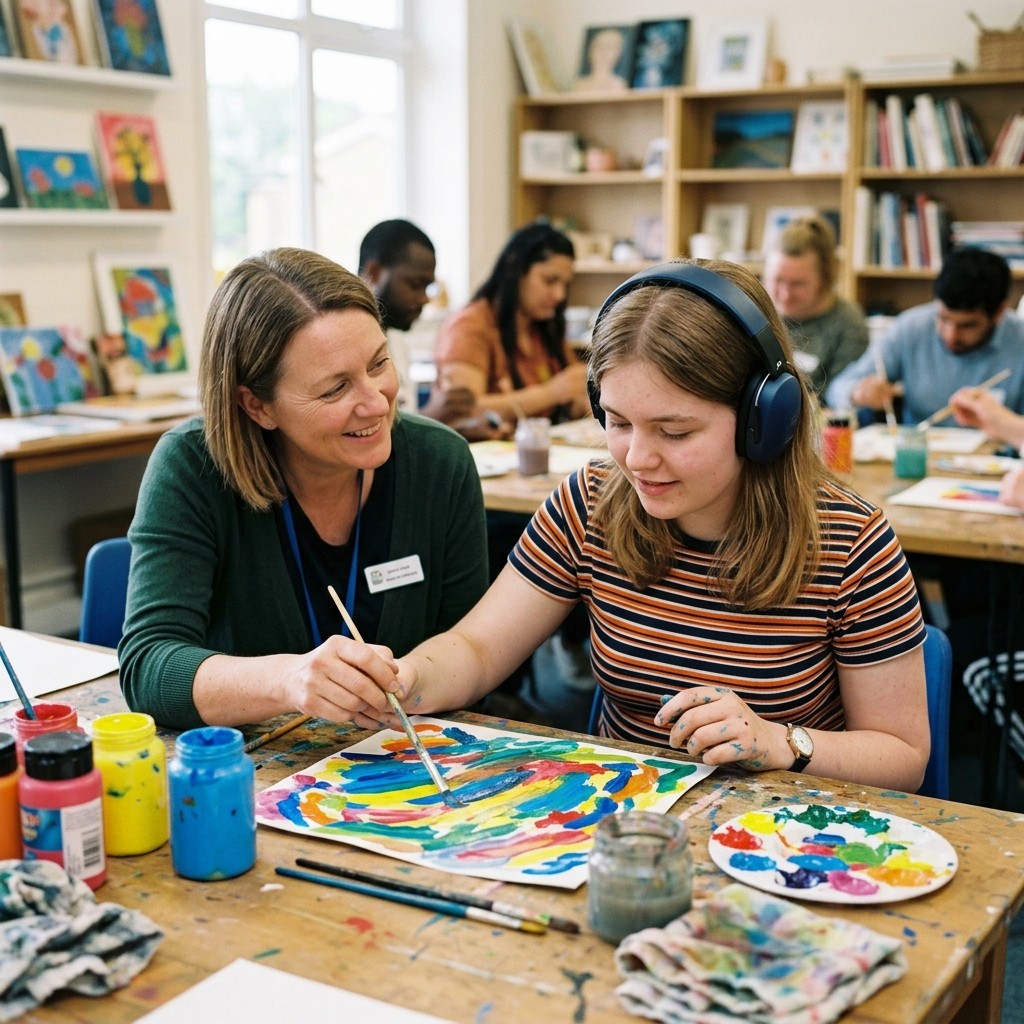
Sensory-friendly spaces to create.
“Our job isn't to turn fun into therapy — it's to be present, friendly and useful, then step back the second we're not needed.”
— How we think about Social & Recreation
Practical, person-centred support — mixed to suit you.
Social & recreation support can look like almost anything legal and safe that brings you joy. Here are some popular examples.
Outings and events
Concerts, footy, markets, festivals, the movies. We plan, we drive, we stay with you (or just nearby), and we make sure the day goes well.
Creative pursuits
Art classes, music groups, writing circles, ceramics — finding inclusive options near you and helping you settle in.
Sport and movement
Adapted sport, gym sessions, swim squads, walking groups. We support consistency, which is where confidence comes from.
Faith and culture
Getting to services and cultural events that matter to you — quietly, respectfully, on your terms.
Friendships and gatherings
Hosting a movie night at home, getting to a friend's birthday, joining a meet-up group. The social glue, supported.
Special interests
From trains to anime to historical reenactment — if it lights you up, we'll help you go deeper into it.

You're welcome here.
Social & Recreation suits anyone who wants more joy in their week. It's especially valuable for participants whose social lives have shrunk, for people whose families do most of the social support, and for anyone whose disability makes the logistics of going out feel heavier than the experience itself.
We're particularly mindful of autistic participants who love their interests but find groups draining — we can do 1:1, small group or 'parallel hobby' formats (sharing a space without forced interaction). What matters is that the support fits the human, not the program.
- Adults who want more in their week than appointments
- Participants with deep special interests
- People rebuilding social life after isolation
- Autistic participants who prefer 1:1 or small groups
- Young adults exploring identity and community
- Families wanting the social load shared
How it fits your NDIS plan.
UCCS is a registered NDIS provider. We support participants however their funding is managed — self-managed, plan-managed or NDIA-managed — and we're happy to walk through what's possible under your plan, without jargon.

Registered with the NDIS Quality and Safeguards Commission, audited against the NDIS Practice Standards and bound by the NDIS Code of Conduct.
Social & Recreation is most often funded under Core Supports — 'Assistance with Social, Economic and Community Participation' (the 04 group). Many plans also include Capacity Building funding for 'Increased Social and Community Participation' that supports skill development.
Activity costs (movie tickets, gym fees, equipment) are usually your responsibility, but the worker hours that get you there and support you while you're there are typically NDIS-funded. We'll always be upfront about what the participant is paying for vs. what's claimable.
UCCS is a registered NDIS provider. We support self-managed, plan-managed and NDIA-managed participants and provide clean invoices that make claiming straightforward. We never bill for activity tickets through your plan.
A clear, unhurried five-step path.
We move at your pace. Every step is consent-led and reviewable — if something isn't working, we change it.
Listen
We start by hearing your story — what's working, what isn't, and what you'd like more of.
Understand
We map needs, goals, preferences, sensory and communication style, and any clinical context.
Plan together
We draft a support plan with you (and family, where you want them involved) — workers, hours, routines.
Deliver
Consistent workers, clear handovers, dignified support. We sweat the small stuff so you don't have to.
Review
Regular check-ins, and an open invitation to change anything. Plans should grow with the person.
Out in the community, on your terms.
A glimpse of an everyday shift.
Here's a Friday evening for a fictional participant we'll call Riya — a 27-year-old woman with an intellectual disability who loves musicals and has been working toward going to the theatre regularly. Her worker is Mel.
Mel arrives. They run through the show plan: which entrance, which seats (aisle, for ease of exit), interval timing, and the agreed quiet-out signal if Riya needs a break.
Pre-show dinner at the café across from the theatre. Riya orders her own meal; Mel hangs back and chats about the show they're about to see.
Lights down. Mel sits one seat over to give Riya space. Halfway through act one, Riya leans across with a delighted whisper about the choreography.
Show over. They stay for the standing ovation. Riya wants a quiet moment in the foyer before the crowd surge — Mel knows the spot.
Home. Mel makes a quick cup of tea while Riya plays the soundtrack. A short shift note: 'Loved it. Wants to see it again. Next: the matinee of the new show in March.'
Riya pays for her own ticket out of her own money. The NDIS pays for Mel's hours. What it adds up to is a Friday night that, two years ago, didn't seem possible. Joy is a serious outcome.
Common questions, answered honestly.
Can't see your question? Email us at info@unlimitedcommunitycare.com.au and we'll come back to you.
Related supports that often go hand in hand.
Let's talk about what support could look like for you.
A friendly, no-pressure chat — we'll listen, answer your questions, and only suggest support that genuinely fits.