.png)
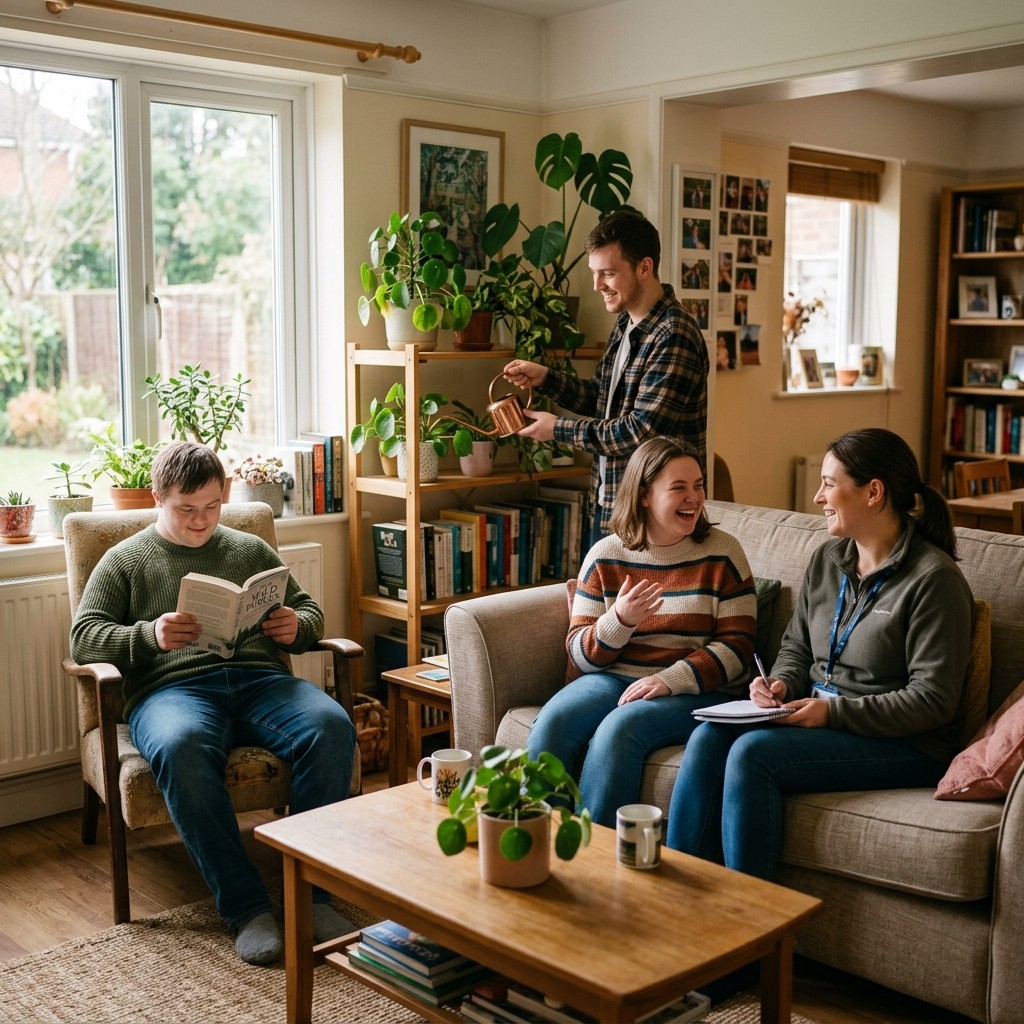
A home of your own — with the right support, quietly in place.
Supported Independent Living for adults who want to live as independently as possible, with a steady team alongside for the parts of life that need a hand.
Support that fits the rhythm of your life — not the other way around.
Supported Independent Living, or SIL, is the support that helps an adult with disability run their own home. That might mean living on your own, sharing with one or two housemates, or living in a small group home. The model is flexible — what stays the same is the goal: a real home where you feel safe, settled and in charge of your day.
SIL doesn't usually pay for the bricks and mortar (that's covered separately — usually through your own rent or a Specialist Disability Accommodation arrangement). What SIL funds is the staff team: the people who help you cook, clean, get to your appointments, take your medication, manage your money, and live the social life you want. Depending on your needs, that support might be there 24/7, only at certain times of day, or shared between you and your housemates.
At UCCS, we plan SIL like we plan everything — around the people in the house. We don't drop a generic roster on you; we build the routine with you, your family and your support coordinator, and we revisit it whenever life changes.
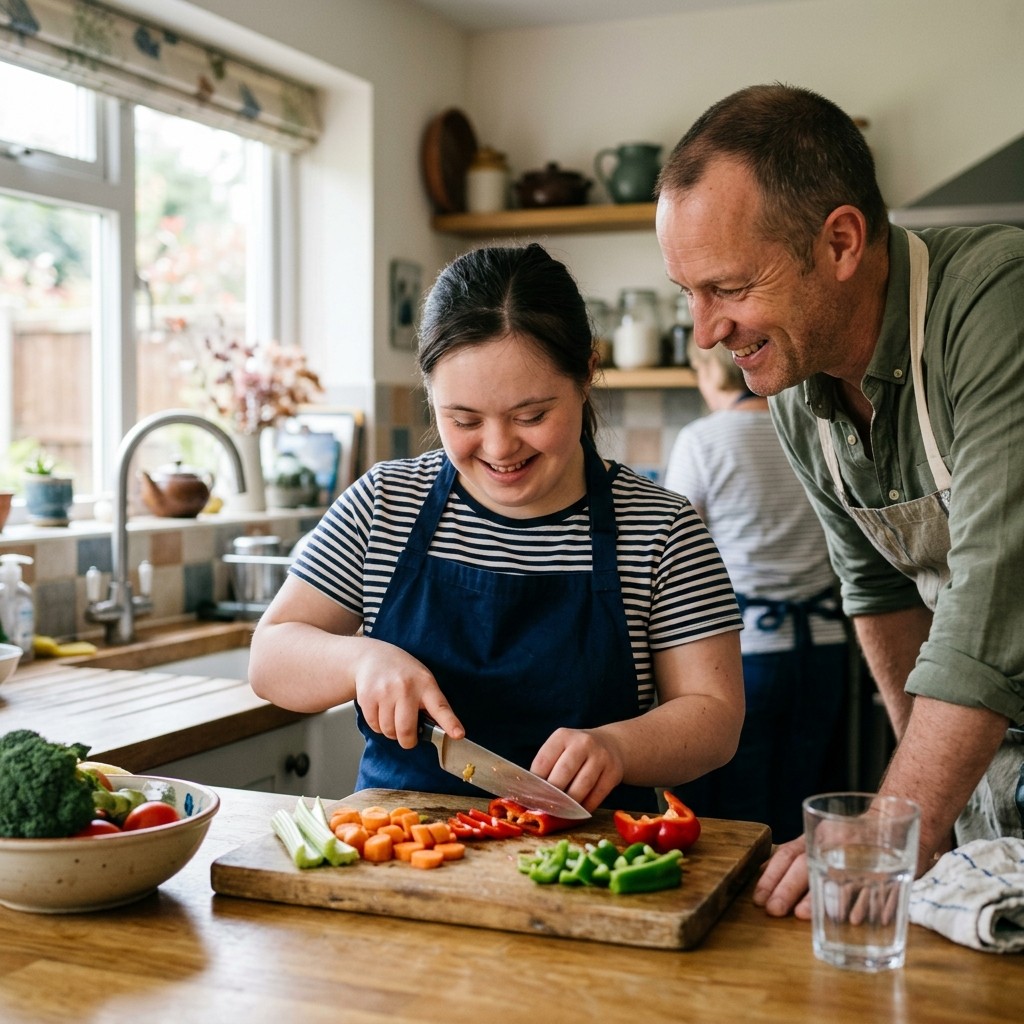
Building life skills, one routine at a time.
“We don't drop a generic roster on you — we build the routine with you, and revisit it whenever life changes.”
— How we approach SIL
Practical, person-centred support — mixed to suit you.
Every SIL arrangement is bespoke. Below are the kinds of supports that often sit inside a UCCS SIL package — adjusted to your plan, your housemates and the rhythm of your home.
Help running the household
Cleaning, laundry, cooking, shopping, budgeting bills — sharing the load in a way that builds skills, not dependence.
Active overnight support
Where it's needed, a worker on shift through the night for safety, medication, or simply the reassurance of someone being there.
Sleepover and on-call shifts
A flexible mix of awake, asleep and on-call shifts so support matches actual need without padding the budget.
Health and medication management
Prompts, Webster-pak support, GP and specialist appointments, and clear communication with your treating team.
Skill-building, daily
From running the dishwasher to handling a tradie phone call, we look for everyday chances to practise the skills that build real independence.
Housemate matching and harmony
If you're sharing, we take compatibility seriously — interests, routines, sensory needs and personality all matter.

You're welcome here.
SIL suits adults with disability who need a meaningful amount of support to live well at home. That doesn't have to mean 24/7 — many of our participants have a few hours of support at key times of day. The common thread is that the support is anchored to a particular home and a particular team that knows you.
We support people with intellectual disability, autism, complex behaviours of concern, and people who need active overnight care. If you're moving out of the family home for the first time, leaving an arrangement that isn't working, or returning to community living after hospital, we'll move at the pace that's right for you.
- Adults moving out of the family home
- People with active overnight support needs
- Participants with behaviours of concern (positive behaviour support friendly)
- Existing households needing a new SIL provider
- People considering shared vs solo living
- Participants transitioning from hospital or short-term accommodation
How it fits your NDIS plan.
UCCS is a registered NDIS provider. We support participants however their funding is managed — self-managed, plan-managed or NDIA-managed — and we're happy to walk through what's possible under your plan, without jargon.

Registered with the NDIS Quality and Safeguards Commission, audited against the NDIS Practice Standards and bound by the NDIS Code of Conduct.
SIL is funded under Core Supports and is one of the more carefully scoped parts of an NDIS plan. The NDIA approves a SIL quote based on your assessed support needs, the number of housemates and the staffing model. Your support coordinator usually leads the quote process, and we'll happily contribute the operational detail.
Because SIL is provider-quoted, transparency matters. We provide line-item-clear rostering, monthly reporting, and we flag any changes that might affect the quote at your next review. If your needs reduce, we'll say so — we never want to be holding hours that should go back to you.
UCCS is a registered NDIS provider, so we can deliver SIL under any plan type — including NDIA-managed plans, which require a registered provider. We'll always be upfront about what we can and can't deliver under your current arrangement.
A clear, unhurried five-step path.
We move at your pace. Every step is consent-led and reviewable — if something isn't working, we change it.
Listen
We start by hearing your story — what's working, what isn't, and what you'd like more of.
Understand
We map needs, goals, preferences, sensory and communication style, and any clinical context.
Plan together
We draft a support plan with you (and family, where you want them involved) — workers, hours, routines.
Deliver
Consistent workers, clear handovers, dignified support. We sweat the small stuff so you don't have to.
Review
Regular check-ins, and an open invitation to change anything. Plans should grow with the person.
Out in the community, on your terms.
A glimpse of an everyday shift.
Here's a snapshot of a SIL household we'll call '14 Banksia Court' — three housemates with intellectual disability, two awake workers in the morning, one through the evening, and an active-overnight worker. Names are illustrative.
Two workers handover with the overnight shift. The whiteboard already shows today's plan: Sam to physio, Priya working at the cafe, Tom at TAFE in the afternoon.
Breakfast happens in waves. Priya is independent and just needs a hand packing her lunch. Sam has prompts for medication and is practising scrambling eggs on the side burner.
Quiet house. One worker runs a shop with Tom for the week's groceries; the other does the laundry round and prepares the evening meal alongside whoever is home.
Evening worker on. Dinner together at the table — phones off, a chat about the day. Tom helps clear up; it's on the household rotation.
Overnight worker arrives. Wind-down routines, medication, sensory-friendly lights low. The day's notes go into the system so tomorrow's team starts informed.
Good SIL is the unfussy art of running a home well, while protecting each housemate's independence. Sam now scrambles eggs without prompting. Priya saved enough to buy a second-hand bike. Tom moved from one TAFE day a week to two. The house didn't change — the support inside it grew with the people.
Common questions, answered honestly.
Can't see your question? Email us at info@unlimitedcommunitycare.com.au and we'll come back to you.
Related supports that often go hand in hand.
Let's talk about what support could look like for you.
A friendly, no-pressure chat — we'll listen, answer your questions, and only suggest support that genuinely fits.