.png)
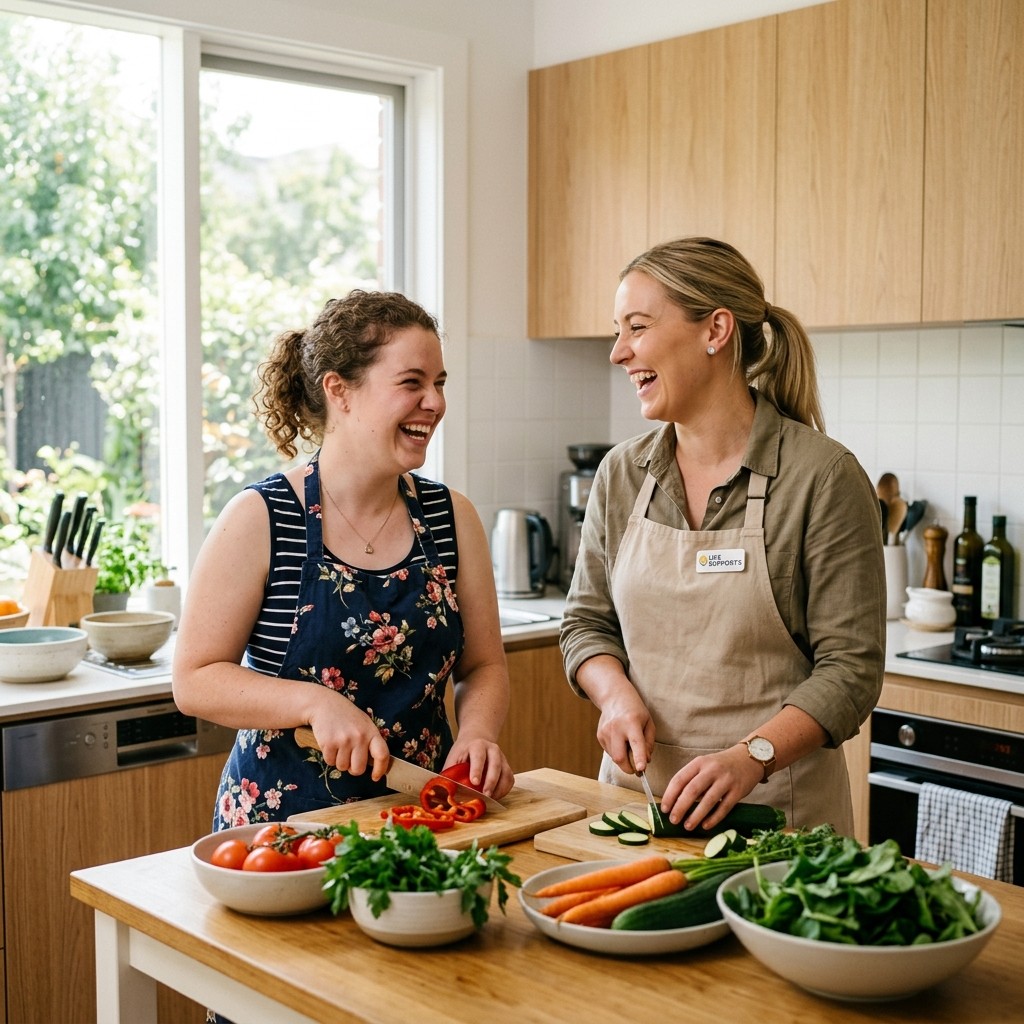
Household Tasks — a home that feels calm and looked-after.
Help around the house that keeps you in charge of your space — done together where we can, done for you when we need to.
Support that fits the rhythm of your life — not the other way around.
When the dishes pile up, the washing basket overflows and the fridge is empty, everything else gets harder. Household Tasks is the NDIS support that takes the weight off — so home stays a place that feels good to be in.
We approach household support the same way we approach everything: with you, not at you. Where you'd like to learn or maintain a skill, we work alongside. Where you'd rather a task was simply done so you can get on with your day, we do that respectfully too. The mix is yours to set, and it can change week to week.
Our workers are trained to notice the little things — the unsafe extension cord, the expired milk at the back of the fridge, the rug edge that's a trip hazard — without making a fuss. Quiet, dignified housekeeping is its own kind of care.
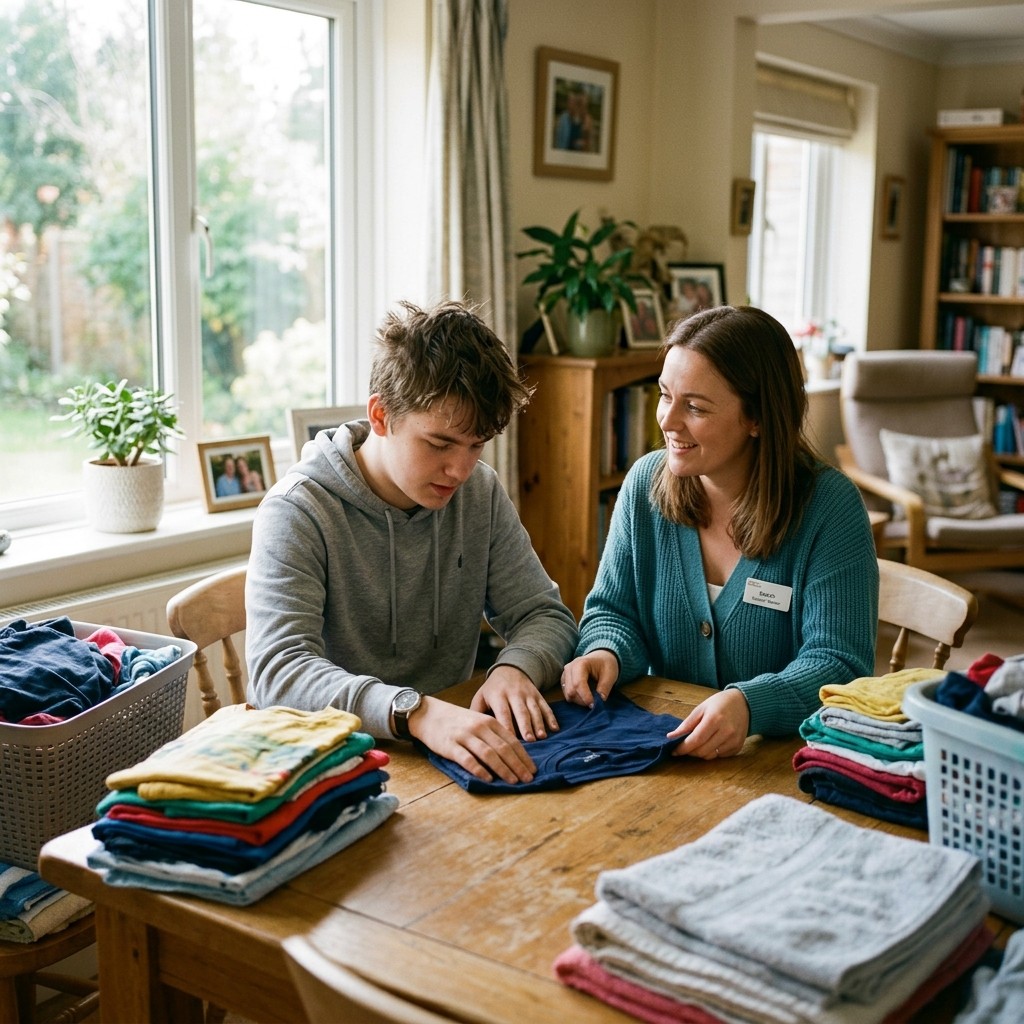
Steady, dignified 1:1 support at home.
“Quiet, dignified housekeeping is its own kind of care.”
— How we think about Household Tasks
Practical, person-centred support — mixed to suit you.
Household Tasks covers the practical work of running a home. Here's what we commonly help with — adjust freely to suit your routine.
Cleaning and tidying
Regular vacuum, mop, bathrooms, kitchen wipe-down, bin night — to the standard you like, not a generic checklist.
Laundry and linen
Washing, hanging, folding and putting away. Bedlinen changes on a schedule that suits you.
Meal prep and cooking
Side-by-side cooking, batch cooking for the week, or simply a hot meal on a hard day. Allergies and preferences respected.
Grocery shopping
Together at the shops, or a click-and-collect run we handle for you. Receipts kept clear so your spending is easy to track.
Home admin
Help opening mail, sorting bills, booking tradies and keeping the kitchen calendar up to date.
Seasonal jobs
Wardrobe swap-overs, fridge clean-outs, smoke alarm checks and the bigger jobs that keep a home running well.

You're welcome here.
Household Tasks is a good fit for adults with disability who live in their own home, with a partner, with family, or in shared accommodation, and who need a hand keeping the home running. It's particularly helpful when fatigue, executive function or sensory overload make these jobs hard to start.
We also support participants who want to learn to manage more of their own home over time. We'll happily build a gentle skill-building plan into the cleaning roster — for example, practising the dishwasher cycle one week, the washing machine the next — so confidence grows alongside a tidy house.
- Adults living independently with a hand needed weekly
- People with chronic fatigue or pain alongside disability
- Participants building skills toward more independent living
- Households where a primary carer needs the load shared
- Autistic adults who find executive-function tasks draining
- Participants preparing to move into their own place
How it fits your NDIS plan.
UCCS is a registered NDIS provider. We support participants however their funding is managed — self-managed, plan-managed or NDIA-managed — and we're happy to walk through what's possible under your plan, without jargon.

Registered with the NDIS Quality and Safeguards Commission, audited against the NDIS Practice Standards and bound by the NDIS Code of Conduct.
Household Tasks is typically funded from Core Supports under 'Assistance with Daily Life' — specifically the household tasks line items (01_020 group). Some participants have a separate small budget just for this; others draw on flexible Core funding.
Because the support is hourly and easy to scope, it's one of the simpler parts of an NDIS plan to use. We can do a short trial period to find the right number of hours, then settle into a routine you can rely on.
UCCS is a registered NDIS provider, so Household Tasks can be claimed whether your plan is self-managed, plan-managed or NDIA-managed. Our invoices match your plan's line items so processing is straightforward.
A clear, unhurried five-step path.
We move at your pace. Every step is consent-led and reviewable — if something isn't working, we change it.
Listen
We start by hearing your story — what's working, what isn't, and what you'd like more of.
Understand
We map needs, goals, preferences, sensory and communication style, and any clinical context.
Plan together
We draft a support plan with you (and family, where you want them involved) — workers, hours, routines.
Deliver
Consistent workers, clear handovers, dignified support. We sweat the small stuff so you don't have to.
Review
Regular check-ins, and an open invitation to change anything. Plans should grow with the person.
Communication, your way.
A glimpse of an everyday shift.
Here's a regular Tuesday morning for a fictional participant we'll call Linh — a woman in her 40s living on her own with a mild intellectual disability and chronic fatigue. Her worker is Jordan, who's been with her for nearly a year.
Jordan arrives. The kettle goes on first — they always have a tea and a quick chat about how the week's going and what feels most pressing today.
Linh has chosen the kitchen as the priority. They work through it together: Linh wipes the bench, Jordan does the floor and inside the microwave. Music on, easy pace.
Laundry on, beds remade. Jordan changes the sheets while Linh folds the towels at the table — a task she likes and finds calming.
A quick online grocery order. Linh chooses the meals for the week from her usual list of recipes; Jordan checks for repeat items in the pantry so they don't double up.
Last ten minutes: a tidy of the lounge, the bin out for tomorrow's collection, and a short note in the shift log so next week's session can pick up where today left off.
Linh's place isn't perfect — it doesn't need to be. It's a home that's looked-after, with a routine she helps set, and with someone who treats her preferences seriously. That's what good household support looks like: quietly competent, never patronising, always with the person at the centre.
Common questions, answered honestly.
Can't see your question? Email us at info@unlimitedcommunitycare.com.au and we'll come back to you.
Related supports that often go hand in hand.
Daily Living Support
Steady help with the everyday — often paired with household tasks.
Learn morePersonal Care
Dignified, consent-led personal care for the parts of the day that need it.
Learn moreSupported Independent Living
A home with the right support package, planned around your routines.
Learn moreLet's talk about what support could look like for you.
A friendly, no-pressure chat — we'll listen, answer your questions, and only suggest support that genuinely fits.