.png)
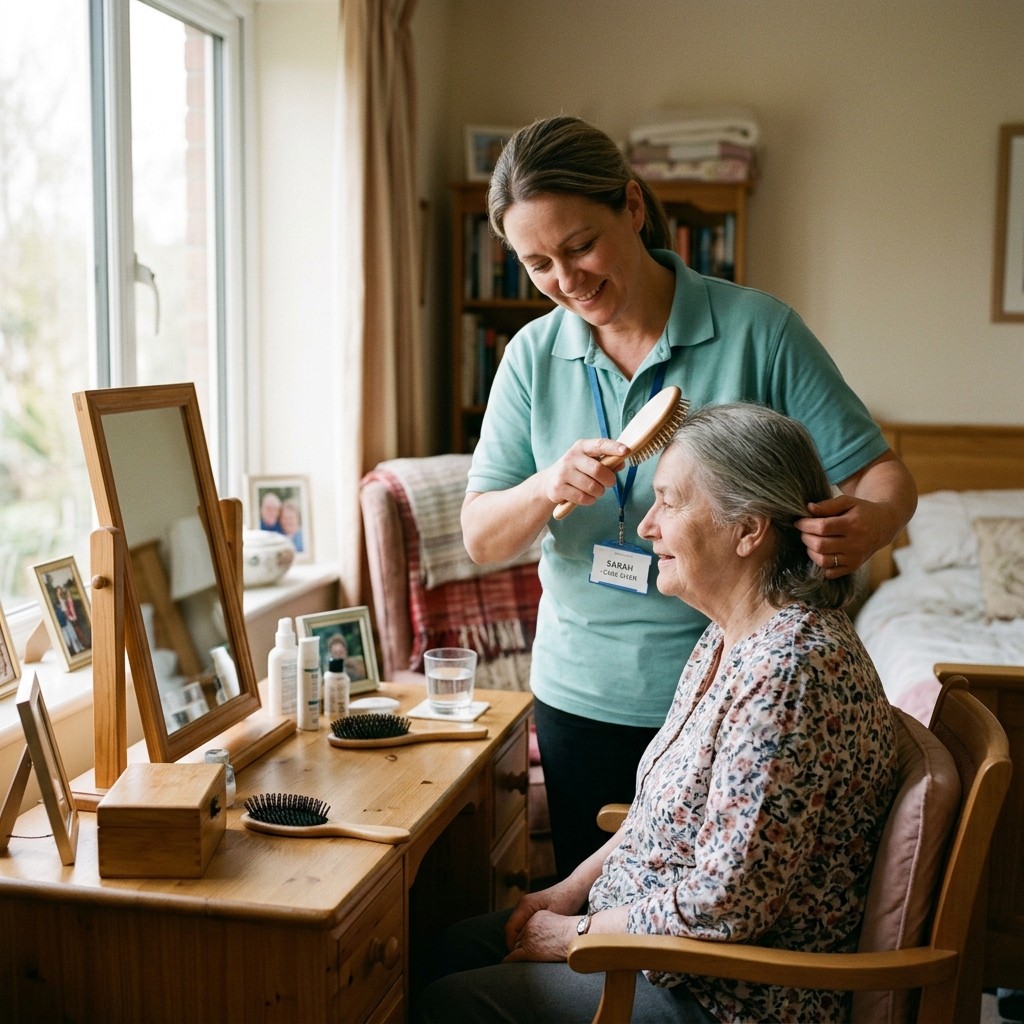
Personal Care, delivered with dignity at every step.
Respectful, consent-led support with the parts of the day that need privacy, patience and care — from showering and dressing to continence and medication prompts.
Support that fits the rhythm of your life — not the other way around.
Personal care is intimate work. It's also the support that makes the biggest, quietest difference to how a day feels. At UCCS, we treat personal care as a relationship of trust — built slowly, honoured every shift.
Our workers are trained in safe transfers, continence support, infection control and medication assistance. Just as importantly, they're trained in consent: asking before doing, checking in, slowing down when needed and respecting the small preferences that make support feel human (the warmer towel, the door closed, the second rinse).
We match support to the person — not to a procedure. That means understanding sensory sensitivities, communication styles, cultural and religious preferences, and the small rituals that make a routine feel right.
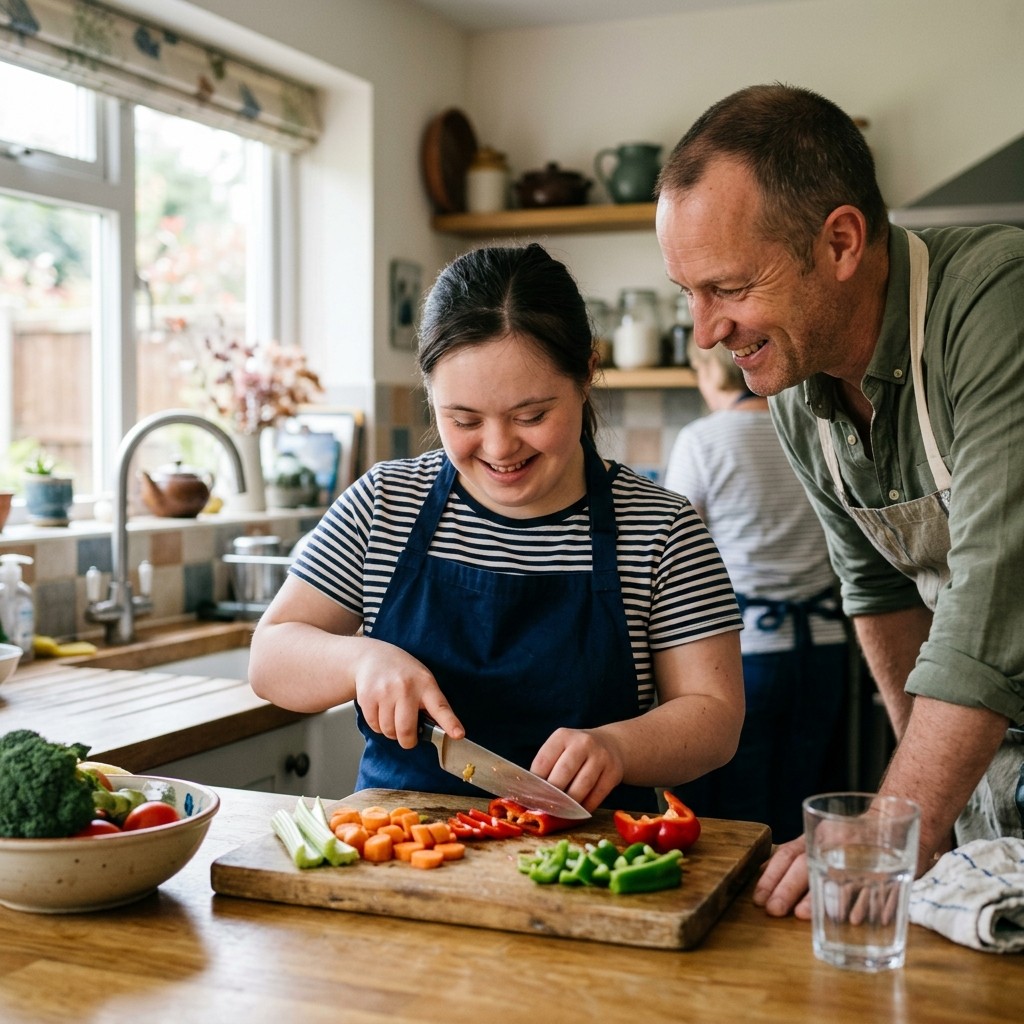
Building life skills, one routine at a time.
“Personal care delivered the way you'd want it for someone you love.”
— Our personal care standard
Practical, person-centred support — mixed to suit you.
Personal care covers a wide range of supports. Here are some of the most common — adjusted, of course, to your needs and preferences.
Morning and evening care
Showering, hair and skin care, dental hygiene, dressing for the day or settling for the night — at the pace that suits you.
Continence support
Discreet, respectful support with toileting, continence products and skin care — privacy first, always.
Medication assistance
Prompts, Webster-pak support, observing and recording doses, and clear handover to your treating team.
Safe transfers
Manual handling, hoist use and mobility support delivered by trained workers, with your safety and comfort first.
Grooming and presentation
Shaving, nails, hair styling and the small touches that help you feel like yourself — your way, on your terms.
Care after hospital
Settling back home after a hospital stay, working with discharge plans and your GP to bridge the recovery period.

You're welcome here.
Personal care is a fit for anyone whose disability makes the personal parts of the day harder to manage independently. That includes adults with physical, intellectual and developmental disabilities, autistic participants with sensory or executive-function challenges, and people whose needs have increased after illness or a hospital admission.
We also support participants who only want personal care occasionally — for example, a worker who comes on the days a partner-carer can't, or a once-weekly hairwash that's hard to do solo. There's no minimum and no judgment about what you need.
- Adults needing daily showering or grooming support
- Participants using mobility aids or hoists
- People with continence support needs
- Autistic adults with sensory-led care preferences
- Participants recovering from hospital
- Families wanting respite from primary personal care
How it fits your NDIS plan.
UCCS is a registered NDIS provider. We support participants however their funding is managed — self-managed, plan-managed or NDIA-managed — and we're happy to walk through what's possible under your plan, without jargon.

Registered with the NDIS Quality and Safeguards Commission, audited against the NDIS Practice Standards and bound by the NDIS Code of Conduct.
Personal care is funded under Core Supports — within 'Assistance with Daily Life' (line items in the 01_011 group), often delivered alongside or as part of a daily living shift. For higher-needs participants, complex bowel care and other clinical tasks may be supported under separate line items.
Because personal care is sensitive, we strongly recommend a meet-and-match before any care begins. You — and your family, if you want — choose the worker. We'll never send someone you haven't met, and we keep your usual workers rostered for consistency.
UCCS is a registered NDIS provider, audited against the NDIS Practice Standards — including the standards that apply to personal care and high-intensity supports. That means we can deliver personal care under any plan type, including NDIA-managed plans.
A clear, unhurried five-step path.
We move at your pace. Every step is consent-led and reviewable — if something isn't working, we change it.
Listen
We start by hearing your story — what's working, what isn't, and what you'd like more of.
Understand
We map needs, goals, preferences, sensory and communication style, and any clinical context.
Plan together
We draft a support plan with you (and family, where you want them involved) — workers, hours, routines.
Deliver
Consistent workers, clear handovers, dignified support. We sweat the small stuff so you don't have to.
Review
Regular check-ins, and an open invitation to change anything. Plans should grow with the person.
Out in the community, on your terms.
A glimpse of an everyday shift.
Here's a typical morning shift for a fictional participant we'll call Margaret — a woman in her 60s with an intellectual disability and limited mobility who lives at home with her sister. Her worker is Tania, who has been with her for two years.
Tania arrives. She knocks before entering Margaret's room. The blinds go up halfway — Margaret prefers a softer wake-up.
Shower transfer using the bench. Tania talks through each step, checks the water temperature with Margaret, and gives her time to wash her own arms — something they've been working on.
Dressed and at the dressing table. Tania brushes Margaret's hair; Margaret chooses today's earrings. A small ritual that matters.
Webster-pak dose checked and ticked off in the medication log. Margaret takes her tablets with the morning tea Tania has already made.
Breakfast at the table with her sister. Tania records the shift, hands over briefly, then leaves so the household can settle into its day.
What stands out isn't the tasks — it's the tone. Margaret is greeted as Margaret, not as a list of supports. She makes choices wherever she can. The shift ends and the household feels lighter for Tania having been there. That's the bar we aim for, every visit.
Common questions, answered honestly.
Can't see your question? Email us at info@unlimitedcommunitycare.com.au and we'll come back to you.
Related supports that often go hand in hand.
Let's talk about what support could look like for you.
A friendly, no-pressure chat — we'll listen, answer your questions, and only suggest support that genuinely fits.